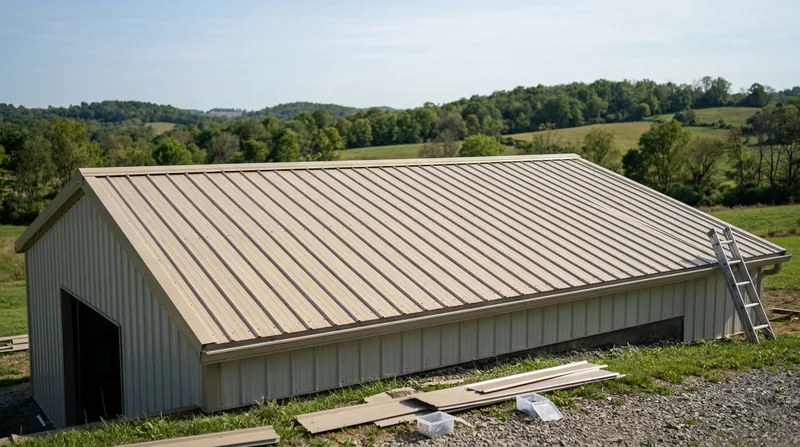




Corrugated & Ribbed Panel Roofing in Pittsburgh: The Exposed-Fastener Workhorse Done Right
Pittsburgh's hillsides, river valleys and narrow lots put a beating on every roof in Allegheny County. Between the lake-effect snow, the constant freeze-thaw cycling and the tree-of-heaven and sugar maples that drop limbs on Brookline and Mount Washington roofs, homeowners need a roof that sheds water fast and takes a hit without a fuss. Corrugated & Ribbed Panel Roofing in Pittsburgh is the exposed-fastener answer: corrugated, R-panel and 5V profiles screwed down over solid decking or purlins, priced well under standing seam and built for garages, porches, additions, barns and whole houses on a budget. We install panels in durable factory colors with the screw patterns and closures that keep out wind-driven rain and ice dam backup. If you want the premium concealed-fastener look instead, see our standing seam metal roofing page. This page covers what corrugated and ribbed panels actually do for a Pittsburgh roof, how we install them, what they cost and how to pick a contractor who will not leave you chasing leaks.
Why Exposed-Fastener Panels Make Sense on Pittsburgh's Steep, Wooded Lots
Most of Pittsburgh's housing stock was never designed for modern roofing. The 1880s-1920s brick row houses in Lawrenceville and Bloomfield, the steep-gabled foursquares in Squirrel Hill, and the post-war Cape Cods across Bethel Park and Penn Hills all share the same problem: short roof runs, tight access and gutters that fill with oak and sycamore leaves every fall. Corrugated and ribbed panels handle that reality better than asphalt shingles in several ways.
- They shed snow and ice faster because the ribs break the bond between snowpack and panel, which cuts ice dam risk on north-facing slopes in Shadyside and Highland Park.
- They resist wind uplift and hail dents far better than three-tab shingles during the severe summer thunderstorms that roll through the Mon Valley.
- They weigh less per square than slate or wet shingle layers, which matters on the older 1900s-1930s frames in Dormont and Carnegie where rafters were sized for lighter loads.
- They go on fast over open purlins, which keeps labor down on garages, sheds and agricultural buildings in Washington and Westmoreland counties.
- They come in long panels that eliminate the horizontal laps where shingle roofs fail first on low-slope porch roofs.
For a Pittsburgh homeowner with a steep lot, a tight driveway and a roof that gets hammered by limbs every winter, exposed-fastener panels are often the most roof per dollar you can buy.
Key info: On a Mount Washington hillside home with a narrow alley and no driveway, we hand-carried 24-gauge R-panel up the public stairway because a truck could not reach the back slope. The panel lengths were cut to fit the stair run, which saved both labor hours and the cost of a crane. That is routine here, not the exception.
Before you commit, verify the current roofing permit requirements with the City of Pittsburgh Department of Permits, Licenses and Inspections, since thresholds and inspection rules vary by municipality across Allegheny County.
How We Install Corrugated and Ribbed Panels on a Pittsburgh Roof
Exposed-fastener metal is simple in principle and unforgiving in practice. A screw driven a quarter turn too deep crushes the neoprene washer and starts a leak within two winters. A panel run that ignores the prevailing wind direction lets rain blow under the ribs. Our process is built around those two failure points and around Pittsburgh's freeze-thaw cycle, which works every fastener and every closure every year.
- We inspect the deck, rafters and purlins, and we replace rotted sheathing before any panel goes down.
- We install underlayment and, where the slope demands it, a high-temp ice and water shield along eaves and valleys.
- We set eave trim, gable trim and ridge vent, then fasten panels with the correct screw pattern for the wind zone and panel profile.
- We install closure strips at eaves, ridges and sidewalls to block wind-driven rain and insect entry.
- We torque every screw to the washer, not through it, and we walk the roof to confirm no overdriven fasteners remain.
- We clean the gutters, haul away all scrap and magnetic-sweep the lawn and driveway for screws.
Every panel job ends with a fastener audit, because a screw that backs out in year three is a leak you paid for twice.
Key info: A Wilkinsburg homeowner had a 1920s detached garage with a sagging shingle roof and a tree-of-heaven growing through the back corner. We removed the tree, sistered two rafters, installed 5V panels over new purlins and closed the gaps at the gable ends. The garage has stayed dry through three winters of ice dams since. See our Wilkinsburg metal roofing service area for the local details.
Panel Profiles and Installation Approaches We Use Across Allegheny County
Not every roof wants the same panel. A barn in Canonsburg and a porch roof in Sewickley need different profiles, different gauges and different fastening schedules. This table shows the main approaches we install and where each one earns its keep.
| Approach | Description | Best for |
|---|---|---|
| Corrugated panels | Wavy profile in 26 or 29 gauge, screwed through the flat, economical and forgiving on older framing | Garages, sheds, barns and porch roofs on uneven 1920s framing |
| R-panel (ribbed) | Trapezoidal ribs in 24 or 26 gauge, longer spans, cleaner lines and better wind resistance | Whole-house roofs, additions and shops with open purlin spans |
| 5V crimp | Classic V-rib profile that matches historic Pittsburgh porch and outbuilding roofs | Historic homes in Lawrenceville, Bloomfield and the South Side Slopes |
| Over existing shingles | Panels on purlins above the old roof, subject to code limits on existing layers | Tight-budget retrofits where tear-off cost is the deciding factor |
| Full tear-off and re-deck | Strip to sheathing, repair rot, install new underlayment and panels | Roofs with soft spots, multiple shingle layers or ice dam damage |
We will tell you which approach your roof actually needs after we get on it, not before.
Corrugated & Ribbed Panel Roofing Cost in Pittsburgh: What to Expect
Exposed-fastener metal is the value play in Pittsburgh roofing. Expect pricing to start around $5.50 per square foot installed for straightforward corrugated work, with R-panel and heavier 24-gauge runs moving up from there. A detached garage in Brookline and a full house roof in Wexford are not the same job, and the spread between them is real.
The biggest cost drivers here are access and tear-off. A steep South Side Slopes lot with no driveway means hand-carrying panels up stairs, and that adds labor. Multiple layers of old shingles mean tear-off and dumpster fees. Rotted sheathing under a 1920s roof means carpentry before metal. Chimneys, skylights, valleys and snow guards add trim work and time. Color and gauge choices move the material price, and a historic district or HOA review in places like Sewickley can add design and approval steps.
Key info: A homeowner in Bethel Park compared two quotes for a 900 square foot ranch roof: one at $5.50 per square foot for corrugated over purlins, one at $9 per square foot for R-panel with full tear-off and new sheathing. The difference was almost entirely tear-off and deck repair, not the panels themselves. Get both numbers in writing before you decide.
Get two or three written estimates and make sure each one states gauge, panel profile, screw type, underlayment and whether tear-off is included. For a fuller breakdown of how we price work, see our metal roofing pricing page.
What to Look for in a Metal Roofing Contractor Near Me in Pittsburgh
Hiring for corrugated and ribbed panel work is where most homeowners get burned, because the material is cheap and the labor is easy to cut. Use the same checklist a contractor would use on his own house.
- Confirm the contractor carries both liability insurance and workers compensation, and ask for the certificate before work starts.
- Get at least two or three written estimates that spell out gauge, profile, fasteners and whether tear-off and disposal are included.
- Ask for references from jobs in Pittsburgh and the surrounding boroughs, and call them.
- Ask who pulls the permit, because roofing permits and inspection thresholds vary by municipality across Allegheny County.
- Ask how they handle historic district or HOA design review if your home is in a protected neighborhood.
A contractor who cannot answer those questions clearly is not the one you want on a ladder over your kitchen. Reach out through our contact page and we will walk you through the process and the paperwork.
Corrugated & Ribbed Panel Roofing in Pittsburgh: Pricing Guide
| Service | Price | Details |
|---|---|---|
| Corrugated panel roof, simple access | Starting at $5.50/sq ft | Includes panels, trim, fasteners and closures on straightforward roofs with truck access |
| R-panel or 24-gauge upgrade | Starting at $7.00/sq ft | Heavier gauge and trapezoidal ribs raise material cost and wind resistance |
| Tear-off and re-deck | Starting at $8.50/sq ft | Removing old shingle layers, replacing rotted sheathing and installing new underlayment |
| Complex or large-scale job | On estimate | Steep hillside access, multiple valleys, chimneys and long panel runs need an on-site look |
| Travel | Included | In Pittsburgh and surrounding areas, no separate call-out or mileage fee |
| Estimate | Free | Response within 24h at (412) 895-2157, no obligation to book |
Indicative pricing, the exact cost depends on square footage, finish, and site access. Free personalized estimate within 24h at (412) 895-2157.


